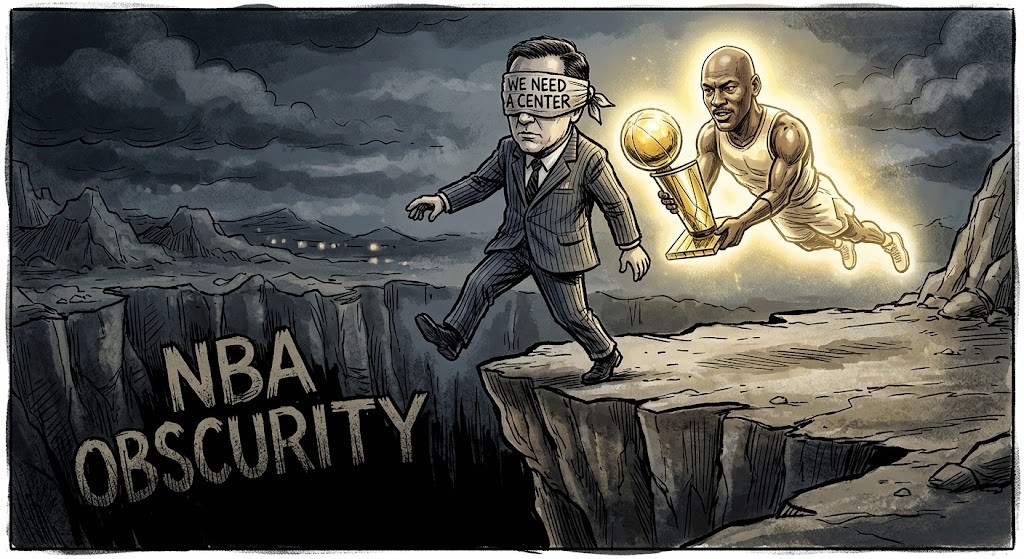
Let us hop in the DeLorean and travel back to the summer of 1984.
Ghostbusters is dominating the box office. Prince just dropped Purple Rain. And the Portland Trail Blazers are about to commit the single greatest act of front-office malpractice in the history of professional sports.
We all know the punchline. The Houston Rockets take Hakeem Olajuwon at number one. (Totally fine. Hakeem is on Mount Rushmore. Nobody gets mad at this). The Trail Blazers are on the clock at number two. They pass on a skinny guard from North Carolina named Michael Jordan to draft Sam Bowie, a center from Kentucky with a medical chart that read like a Stephen King novel.
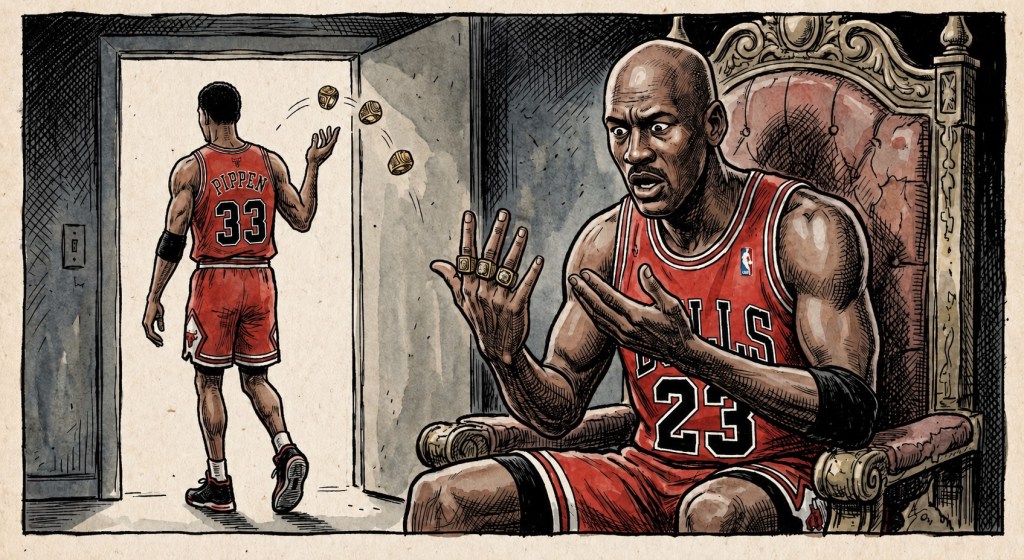
Bowie’s legs shatter. Jordan becomes a global deity, wins six rings, and completely alters the trajectory of sneakers, sports marketing, and human gravity.
But that is just the Wikipedia summary. The real tragedy of this story is not that Portland guessed wrong. It is that the universe literally called them on the telephone and handed them the winning lottery ticket, and they fed it into a paper shredder.
Let’s set the stage. The Trail Blazers general manager at the time was Stu Inman. Inman was not a scrub. He was the architect of Portland’s 1977 championship team. But in the summer of 1984, he was suffering from a terminal case of “Drafting For Fit.”
Portland already had Clyde Drexler. They drafted him the year before. Inman looked at his roster, saw a logjam at the shooting guard position, and decided he needed a big man to anchor the paint. It is the classic, old-school NBA fallacy: You cannot win without a dominant center.
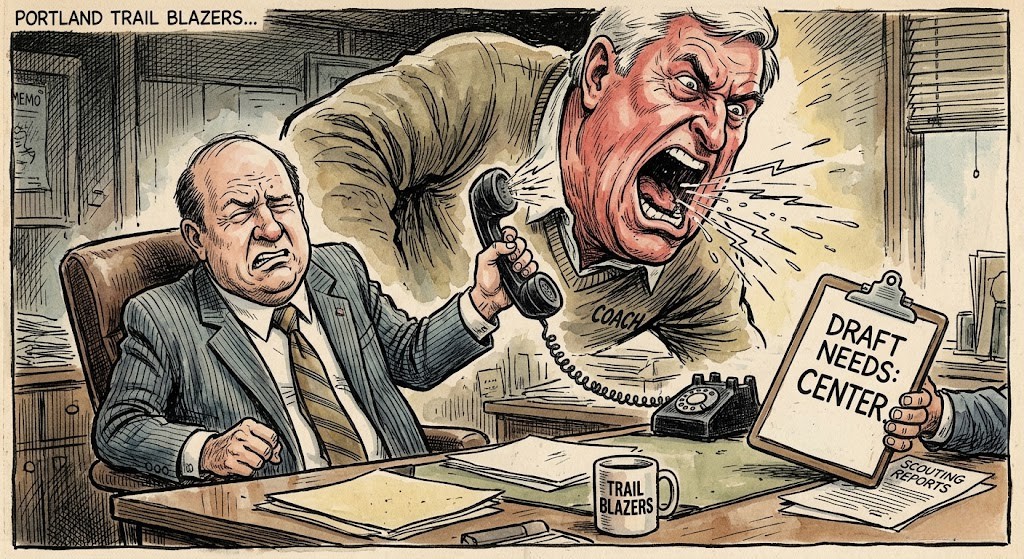
In the weeks leading up to the draft, Inman decides to make a phone call to Bobby Knight.
Knight was coaching the 1984 USA Men’s Olympic basketball team. He had spent the entire summer putting a college-aged Michael Jordan through the most grueling, miserable, psychologically taxing basketball boot camp ever devised. Knight was a notorious cynic. He did not hand out compliments. He handed out trauma.
But Jordan broke him. Jordan was so ridiculously, terrifyingly good that Knight realized he was watching a basketball alien.
So, Inman calls Knight to ask for his evaluation.
Knight does not just recommend Jordan. He screams it from the mountaintop. He tells Inman that Jordan is the best basketball player he has ever seen. Not the best prospect. The best player.
Inman hesitates. He gives the classic, front-office middle-management excuse.
“But Bob,” Inman says. “We need a center.”
Knight’s response is the single greatest piece of basketball advice ever delivered. It should be chiseled in marble above the entrance of every NBA front office. He did not argue about defensive schemes or usage rates. He simply yelled:
“Then play him at center!”
Think about the sheer magnitude of that statement. Bob Knight, a traditionalist who worshipped fundamental, inside-out basketball, essentially told an NBA executive, “If you have a hole at the five-spot, put this 6-foot-6 shooting guard in the post and you will still win.”
It is the equivalent of a Hollywood producer turning down a young Tom Cruise for Top Gun because they really needed a guy who knew how to fly a real F-14, and Ridley Scott screaming, “Then put him in a fake plane!”
Portland ignored him. They drafted Bowie.
We try to rationalize this pick today. We talk about the era. We talk about how the NBA was a big man’s league. We talk about Kareem and Moses Malone. But that is just a coping mechanism for the greatest blunder of the 20th century.
Imagine a 1985 Portland Trail Blazers starting lineup featuring Clyde Drexler and Michael Jordan on the wings.
It would have looked like a fast break designed by Quentin Tarantino. It would have been pure, unadulterated violence at the rim. Who cares who the center is? You could have put me or your local mailman at center. Drexler and Jordan would have jumped over the entire opposing frontline, intercepted every passing lane, and scored 130 points a night just by outrunning everyone in the building.
Instead, Portland tried to play it smart. They tried to fill a positional need.
In the NBA, when you have the chance to draft a generational supernova, you do not look at your depth chart. You do not worry about who is going to share the ball. You draft the alien, you figure out the rest later, and if you have to, you play him at center.
 HoopersNation
Leave a comment